

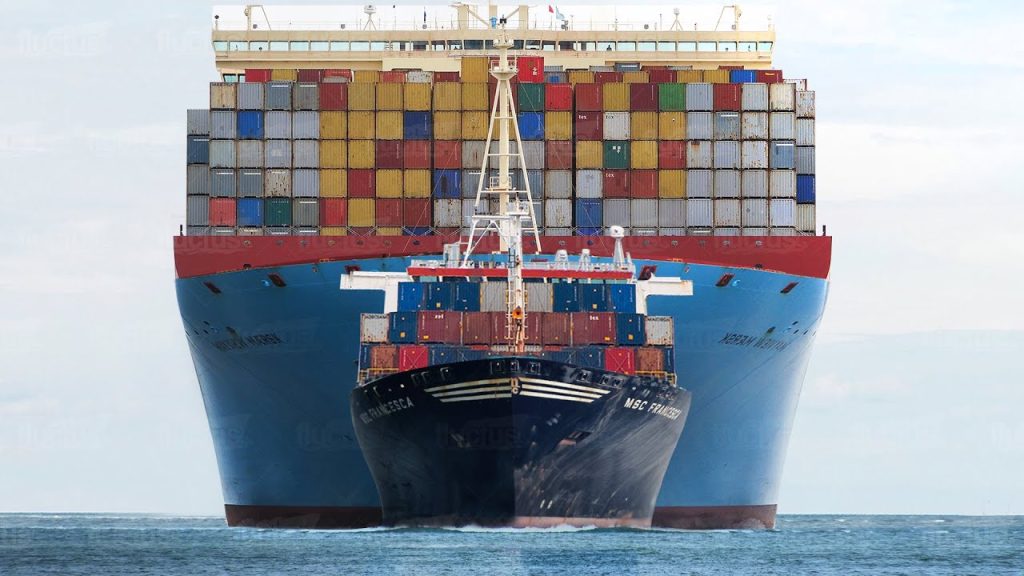
Shipping has been an integral part of human civilization, enabling trade, exploration, and cultural exchange across the globe. The journey from ancient vessels to modern cargo ships is a testament to human ingenuity and technological advancement. This article delves into the fascinating evolution of shipping, highlighting key developments and milestones that have shaped maritime history.
Ancient Vessels: The Dawn of Maritime Exploration
Early Beginnings
The earliest evidence of maritime activity dates back to around 4000 BCE when ancient Egyptians used reed boats to navigate the Nile River. These simple vessels, constructed from bundled papyrus reeds, were primarily used for fishing and transportation along the river. The Mesopotamians and the Indus Valley civilization also developed early forms of boats for trade and transportation.
Phoenician Maritime Prowess
The Phoenicians, an ancient seafaring people from the eastern Mediterranean, are credited with significant advancements in shipbuilding around 1500 BCE. They developed robust wooden ships, known as triremes, which featured multiple rows of oars and a sail. These vessels were instrumental in establishing Phoenician dominance in Mediterranean trade, enabling the exchange of goods, culture, and ideas.
The Age of Exploration: Expanding Horizons
Greek and Roman Contributions
The Greeks and Romans made substantial contributions to maritime technology. The Greeks improved ship design by introducing the bireme, a ship with two rows of oars, and later the trireme, which had three rows. These advancements allowed for greater speed and maneuverability in naval warfare and trade.
The Romans further enhanced shipbuilding techniques, constructing large merchant vessels capable of carrying substantial cargo. The Roman fleet played a crucial role in maintaining the vast Roman Empire by ensuring the steady supply of goods, troops, and resources across the Mediterranean.
The Viking Longships
In the 8th to 11th centuries, the Vikings emerged as formidable seafarers. Their longships, characterized by a sleek, shallow draft design, allowed them to navigate both open seas and shallow rivers. These versatile vessels enabled the Vikings to conduct extensive raids, trade, and exploration across Europe, reaching as far as North America.
The Age of Sail: Global Trade and Exploration
The Age of Discovery
The 15th and 16th centuries marked the Age of Discovery, a period of extensive global exploration. European explorers, driven by the quest for new trade routes and territories, embarked on ambitious voyages across the Atlantic, Indian, and Pacific Oceans. Notable explorers like Christopher Columbus, Vasco da Gama, and Ferdinand Magellan relied on advanced sailing ships such as caravels and galleons.
Caravels, with their triangular lateen sails, were highly maneuverable and capable of sailing against the wind. Galleons, on the other hand, were large, multi-decked ships designed for long-distance voyages and carrying valuable cargo. These ships played a pivotal role in establishing European colonies and expanding global trade networks.
The East Indiamen
In the 17th and 18th centuries, the East India Companies of various European nations, such as the British and Dutch, dominated maritime trade with the East Indies. The East Indiamen, large and heavily armed merchant ships, were used to transport valuable commodities like spices, silk, and tea. These vessels were equipped with both sails and cannons, ensuring their safety against piracy and hostile naval forces.
The Age of Steam: Revolutionizing Maritime Transportation
The Advent of Steamships
The early 19th century witnessed a revolutionary shift in maritime transportation with the advent of steamships. The development of the steam engine by inventors like James Watt paved the way for steam-powered vessels that could navigate regardless of wind conditions. The SS Savannah, launched in 1819, became the first steamship to cross the Atlantic Ocean.
The Rise of the Clipper Ships
Despite the advent of steamships, the mid-19th century saw the rise of the clipper ships. These sleek, fast sailing vessels were designed for speed and were primarily used in the trade of perishable goods like tea and spices. The most famous clipper, the Cutty Sark, could achieve remarkable speeds, making it a symbol of maritime excellence.
Ironclads and Warships
The latter half of the 19th century saw significant advancements in naval warfare with the introduction of ironclad warships. These vessels, constructed with iron or steel plating, were virtually impervious to traditional wooden ship cannon fire. The USS Monitor and CSS Virginia, ironclads used during the American Civil War, marked the beginning of a new era in naval engineering.
The Modern Era: Cargo Ships and Containerization
The Advent of Modern Cargo Ships
The 20th century ushered in the age of modern cargo ships, driven by technological advancements and the growing demand for global trade. The shift from sail to steam and eventually to diesel engines revolutionized maritime transportation. Diesel engines offered greater efficiency and reliability, enabling ships to cover longer distances with reduced fuel consumption.
The Birth of Containerization
One of the most significant developments in modern shipping is containerization. Introduced in the 1950s by American entrepreneur Malcom McLean, containerization revolutionized the shipping industry by standardizing cargo sizes and streamlining the loading and unloading process. The use of standardized containers allowed for seamless intermodal transportation, reducing shipping costs and transit times.
The Rise of Mega Ships
In recent decades, the shipping industry has witnessed the rise of mega ships, enormous vessels capable of carrying tens of thousands of containers. These ultra-large container ships (ULCS) are designed to maximize efficiency and reduce the cost per container, driving economies of scale. The MSC Gülsün, launched in 2019, is one of the largest container ships in the world, capable of carrying over 23,000 TEUs (twenty-foot equivalent units).
Technological Advancements: Automation and Sustainability
Automation and Digitalization
The modern shipping industry is embracing automation and digitalization to enhance efficiency and safety. Autonomous ships, equipped with advanced sensors and AI-driven navigation systems, are being developed to reduce human error and operational costs. Additionally, blockchain technology is being integrated into supply chain management to ensure transparency and traceability.
Sustainability and Green Shipping
Environmental sustainability has become a key focus in the shipping industry. Efforts to reduce greenhouse gas emissions and minimize the ecological impact of shipping have led to the development of eco-friendly technologies. The use of liquefied natural gas (LNG) as a cleaner alternative to traditional marine fuels, the adoption of energy-efficient ship designs, and the implementation of stricter emission regulations are all part of the green shipping movement.
Conclusion
The evolution of shipping, from ancient vessels to modern cargo ships, is a testament to human innovation and the relentless pursuit of progress. Each era brought significant advancements in ship design, navigation, and technology, shaping the global economy and facilitating the exchange of goods and ideas. As we look to the future, the shipping industry continues to evolve, embracing automation, digitalization, and sustainability to meet the demands of a rapidly changing world.

